Paperlane: A Sweet Handwritten Display Font for Crafters
As someone who designs printable wedding suites, hand-labels small-batch candles, and cuts vinyl decals for boutique gift shops, I’ve learned that the right font isn’t just about aesthetics—it’s about trust. When a customer sees a beautifully handwritten name on a baby shower invitation or a delicate “Locally Made” tag on artisan soap, they’re not just reading words. They’re sensing care, intention, and personality. That’s why Paperlane has become one of my go-to display fonts in the Script Amp collection—it delivers warmth without sacrificing clarity, charm without compromising cutability.
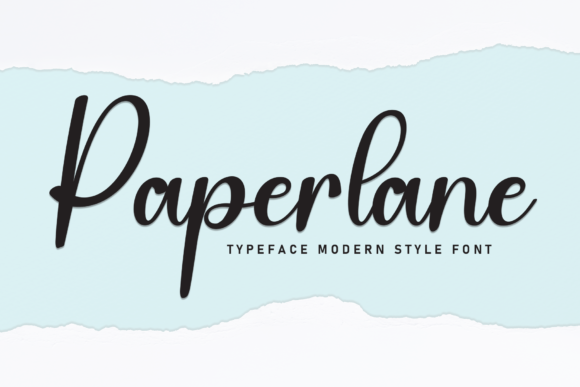
Paperlane is a friendly, slightly bouncy handwritten display font—think soft curves, gentle slant, and open letterforms that breathe on the page. It’s not overly ornate, nor does it lean into trendy exaggeration. Instead, it feels like a thoughtful note from a friend: approachable, sincere, and quietly polished. The lowercase “a,” “g,” and “y” have subtle personality, while capitals maintain clean proportions—making Paperlane unusually versatile for both decorative titles and short functional phrases.
I use Paperlane most often where emotional resonance matters: wedding welcome signs, boutique clothing tags, greeting cards for birthdays and baby announcements, and seasonal printable wall art (especially spring and summer collections). Its sweetness reads clearly at 24pt on a 5x7” printed card—and even scales down reliably to 16pt for small sticker labels on jam jars or handmade tea tins. On my Cricut Maker, Paperlane cuts cleanly in SVG format when I avoid ultra-thin strokes and stick to medium-weight outlines. For Silhouette users: export as a high-res PNG with anti-aliasing turned off for best cut preview accuracy.
What makes Paperlane especially useful for product-based creators is its balance of expressiveness and legibility. Unlike some script fonts that blur together at small sizes or collapse when printed on kraft paper, Paperlane holds its shape. I’ve used it for:
- Handmade candle labels—paired with a clean sans serif (like Montserrat or Poppins) for scent names and ingredients
- Farmhouse-style wooden signs (“Gather Here,” “Home Grown,” “Hello, Summer”) where its friendly rhythm complements natural textures
- Digital download planner stickers—its rounded terminals prevent jagged edges when resized for 0.75” die-cut sheets
- Wedding welcome boards and escort cards—where guests instantly feel welcomed by its gentle tone
- Holiday product packaging—think “Merry & Bright” on reusable cotton gift bags or “Warm Wishes” stamped on linen pouches
For brand consistency across physical and digital products, I pair Paperlane with typefaces that ground its playfulness. My most reliable combos are:
- Paperlane + Lato: A warm, humanist sans serif that shares similar x-height and rhythm—ideal for labels, business cards, and Etsy shop banners
- Paperlane + Playfair Display: A refined serif that adds quiet elegance to wedding stationery while letting Paperlane shine in headlines
- Paperlane + DM Sans: A neutral, highly readable workhorse for body text in printable templates, especially when offering editable Canva versions
If you're working with cutting machines, keep an eye on the included file formats—Paperlane comes with OTF and TTF files, plus bonus swashes and alternate characters (like a more playful “&” or flourished “t”). These aren’t just decorative extras: I swap in the alternate “o” when designing monogrammed tote bags, and use the swash capital “W” for “Welcome” signs—it adds distinction without overcomplicating the design. There are no ligatures or extensive multilingual glyphs, so if your shop serves Spanish- or French-speaking customers, test key accents (ñ, é, ç) before finalizing packaging layouts.
Readability tips that matter in real life: avoid stacking Paperlane in all-caps for long phrases—it’s designed as a display font, not a paragraph workhorse. Stick to short bursts: names, titles, greetings, and product descriptors. For longer text blocks (like care instructions on a label), always switch to a legible sans serif. And when printing on textured paper or using heat-transfer vinyl, increase tracking by 10–15 units—those soft joins between letters need breathing room to stay crisp.
Licensing is non-negotiable when you sell physical goods or digital downloads—and Paperlane includes a clear commercial license. That means you can use it in client projects (like custom wedding invites for a local couple), embed it in Canva templates you sell on Etsy, apply it to SVG files for crafters’ cutting machines, and print it on mugs, shirts, and tote bags—no extra fees or attribution required. Just be sure to review the license terms directly from the vendor; some platforms restrict redistribution of raw font files within editable templates, but using Paperlane *within* your layered design files is fully permitted.
What sets Paperlane apart isn’t just how it looks—it’s how it performs across the full lifecycle of a handmade product: from screen mockup to printed proof, from vinyl cut to final unboxing. It helps customers pause, smile, and feel seen. In a crowded marketplace where authenticity sells, Paperlane gives your brand voice—not noise.